
Building Efficient Large-Scale Model Systems with DeepSpeed: From Open-Source Foundations to Emerging Research
Organizers

Olatunji Ruwase
Snowflake

Minjia Zhang
University of Illinois Urbana-Champaign
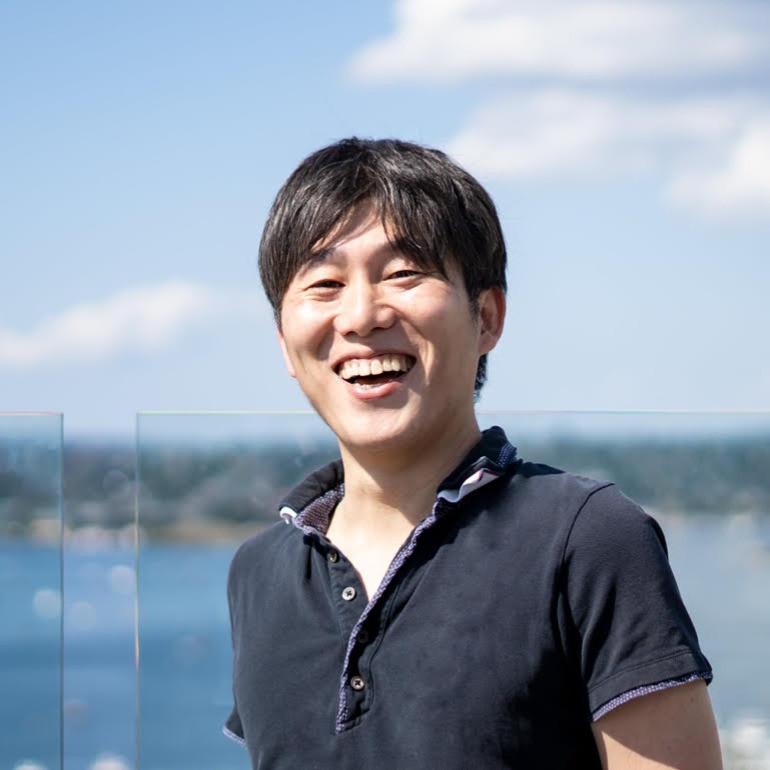
Masahiro Tanaka
Anyscale
Zhipeng Wang
LinkedIn
Overview
Large foundation models such as ChatGPT, Gemini, and DeepSeek have redefined the frontier of AI systems, yet their massive scale exposes significant challenges in distributed pre-training/post-training (e.g. reinforcement learning and supervised fine-tuning), efficiency, and hardware utilization. The community increasingly relies on open-source software to bridge these gaps, which enables researchers and practitioners to experiment, prototype, and optimize at unprecedented scale. Among these, DeepSpeed has become one of the most widely adopted open-source frameworks for large-model training, which empowers both academic research and industrial production deployments.
In this tutorial, we will present the system, compiler, and hardware co-design techniques that extend DeepSpeed into a powerful platform for scalable and efficient training of large foundation models. We will cover how DeepSpeed's runtime architecture supports new forms of distributed and heterogeneous execution, and how software-hardware co-design drives innovation in parallelism, offloading, and memory optimizations. Through a series of concrete systems and hands-on system insights, such as DeepSpeed-SuperOffload for training LLMs on emerging GPU-CPU Superchips, combining DeepSpeed's high-performance training with Ray's flexibility for complex distributed workloads including RL, DeepCompile for compiler-driven distributed optimizations, and DeepSpeed on TPU for heterogeneous hardware, we will connect core system design principles to real-world system implementation. By the end, participants will leave with both conceptual understanding of large-model system design and concrete techniques to apply in their own research, helping to build the next generation of efficient, scalable, and open AI infrastructures.
Tutorial Content and Tentative Schedule
| 8:30–9:15 | Introduction and Motivation |
| Tunji Ruwase | |
|
| 9:15–10:00 | Ray + DeepSpeed for LLM Training |
| Masahiro Tanaka | |
|
| 10:00–10:30 | Coffee Break |
| 10:30–11:15 | DeepSpeed-Based Systems Optimization for LLM Training: Breaking the Three Walls of LLM Training Systems |
| Minjia Zhang | |
|
| 11:15–12:00 | Training LLMs on Alternative Accelerators and Novel Optimizers |
| Zhipeng Wang | |
|
Prerequisites
- Basic familiarity with deep learning and transformer models
- Working knowledge of PyTorch or similar frameworks
- Prior experience with distributed training is helpful but not required
Target Audience
- Researchers and practitioners working on large-scale LLM training
- Systems and architecture researchers interested in AI workloads
- Engineers building distributed training and serving systems